
The Hong Kong Housing Authority has approved a pilot scheme that lets owners of subsidised sale flats lease their units without first paying the land premium, in a move aimed at unlocking idle housing stock and giving middle-income households an option between public rental and private purchase.
The pilot carries a quota of 3,000 flats and is scheduled to launch in September. Owners who have held their flats for 10 years or more may lease to tenants meeting the income and asset limits set out in the "White Form" eligibility criteria, and will not need to pay the premium — currently around 30% of a flat's prevailing market value — that is otherwise required before letting.
At present, leasing a subsidised flat without first paying the premium is a criminal offence. Owners joining the scheme will still pay a Letting Permit Fee, and must apply for two certificates at HK$400 each before letting begins.
"Many owners have owned their [subsidised sale flats] for many years, and their housing needs may have become different due to changes in their family circumstances," a Housing Authority spokesperson said.
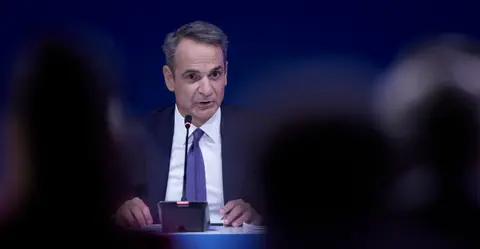
Stephen Cheung, chair of the authority's Subsidised Housing Committee, said the plan would let owners rent out their flats "with peace of mind" and deter them from leasing on the black market.
What is actually being waived
The premium exists because these flats were sold below market value, with the discount representing the public subsidy. Repaying it — assessed at roughly 30% of current market value under the prevailing arrangement — is effectively buying out the state's retained interest, after which restrictions fall away and the flat can be dealt with freely.
What the pilot does is separate use from disposal. Owners get to realise rental income without buying out the subsidy, while the underlying restrictions remain: the unit cannot simply be sold on the open market through this route. The waiver is narrow by design — it grants a letting right, not full title.
Two conditions attached to that partial right explain the structure. Tenants must fall within White Form limits, keeping the subsidy inside the income group it was meant to serve, and the Letting Permit Fee preserves a payment to the authority in place of the premium. Without those conditions the arrangement would simply transfer the subsidy into an unregulated landlord's income.
The arithmetic owners will run
Take an illustrative example, not an actual quotation. If a qualifying flat has a market value of HK$6 million, the premium at roughly 30% would be around HK$1.8 million — payable up front, before a single month's rent. At a hypothetical rent of HK$15,000 a month, that is about HK$180,000 a year, meaning roughly ten years of gross rent simply to recover the premium, before costs.
Faced with that choice, an owner with a spare flat does not really have a choice: they either leave it empty, let it informally, or pay a sum that may exceed what the flat can ever earn them. The pilot's significance is less about generosity than about removing an impossible option.
Against that, HK$800 in certificate fees plus a permit charge is small enough not to deter eligible owners, though it must be set against the administrative steps of having a tenant's eligibility vetted.
The second scheme the coverage largely missed
The Subsidised Housing Committee approved these measures on 18 June 2026 as part of a package of two programmes aimed at revitalising subsidised sale flats, described as producing benefits for elderly owners, flat owners and White Form tenants simultaneously.
The second strand is directed at elderly owners: it allows qualifying owners aged 60 and above to trade down to smaller units — "large unit for small unit" — through the Home Ownership Scheme secondary market without paying the premium. Applications were reported to open in September alongside the letting pilot.
Read together, the logic is coherent. One scheme releases rental supply from flats that sit under-used; the other enables older owners to move to more suitable homes while freeing larger units for families. Neither requires new construction, which is the point: the measures are attempts to improve utilisation of an existing stock rather than to add supply.
Why legalisation rather than enforcement
Chair Cheung's reference to the black market names the real problem. Unauthorised letting of subsidised flats has long been understood to occur, and prohibition did not eliminate it — it removed incentives to do it openly.
An illegal letting produces predictable consequences: no enforceable tenancy terms, no declarations, no maintenance obligations recorded, and tenants with no practical recourse. Bringing activity inside a permit system converts shadow arrangements into documented ones, with eligibility checks on one side and a defined rental relationship on the other.
That is why the scheme's value should be assessed partly on a counterfactual that cannot be measured: how many of these lettings would have happened anyway, undocumented. Legalising them raises recorded supply without necessarily creating much physical supply.
The open questions
Three limitations deserve to be stated plainly.
Eligibility is controlled; rent is not. The programme restricts who may rent, not what they may be charged. Nothing in what has been announced caps rent below market levels, so affordability for White Form tenants will depend on how pricing behaves — and one might reasonably expect rents somewhere below open-market equivalents given the restrictions attached to both parties, though that is expectation rather than policy.
3,000 is a pilot, not a programme. The quota is modest against the scale of the subsidised sale stock, and take-up requires two-sided matching: an eligible owner willing to let, and an eligible tenant willing to take that particular unit at that particular rent. Whether the quota binds or falls short will itself be informative.
Distribution effects are real. Owners who acquired assets at subsidised prices gain a new income stream without paying the premium that would otherwise release it. Some will read that as rewarding people who already benefited. The counter is that under-used housing helping households priced out of both renting privately and buying is a better outcome than leaving it empty — but the point should be conceded rather than argued away.
Enforcement does not disappear either. Vetting eligibility, monitoring actual occupation, and preventing chains of onward subletting all require continued administrative capacity, and the black market will not vanish entirely while demand exceeds supply.
Watch list
- Take-up against the 3,000 quota, and specifically how many applications convert to permits once tenant eligibility is verified.
- Rent levels actually agreed, which determine whether this delivers affordability or merely legalises existing practice.
- Whether the authority publishes the review criteria for expanding the pilot, and its stated timeline.
- Interaction with the elderly downsizing scheme — whether larger family units are released as intended.
- Whether the premium percentage being cited moves, since the assessment basis is itself policy.
Sources
- Housing Authority statement and briefing: approval of the pilot letting scheme with a 3,000-flat quota and a September launch; the 10-year ownership requirement; White Form income and asset limits for tenants; waiver of the land premium otherwise payable at around 30% of current market value; the continuing criminal liability for letting without payment outside the scheme; the Letting Permit Fee and the two certificates at HK$400 each; the spokesperson's remarks on changing family circumstances; and Stephen Cheung's comments on letting with peace of mind and deterring black-market leasing.
- Government announcement dated 18 June 2026 recording Subsidised Housing Committee approval of two schemes to revitalise subsidised sale flats, framed as a simultaneous benefit for elderly owners, owners and White Form tenants.
- Local reporting describing the second scheme, allowing owners aged 60 and above to trade down to a smaller unit on the HOS secondary market without paying the premium, with applications from September.
- Note: the HK$6 million hypothetical illustration, the ten-year payback estimate and the HK$800 fee total are the author's calculations and illustrations, not official figures. Analysis of the premium mechanics, use-versus-disposal distinction, legalisation rationale, stated limitations and the watch list is the author's and should not be attributed to the Housing Authority.